Community input remains an important part of the process. The public comment period will be open from April 20 through May 15, 2026. Please provide your comments here.
You need to be signed in to comment in this Guest Book.
You need to be signed in to comment in this Guest Book. Click here to Sign In or Register to get involved
I am writing to express my strong support for the City’s Active Transportation Plan (ATP) and to offer specific recommendations that I believe will meaningfully improve safety and accessibility for pedestrians and cyclists throughout our community. I am encouraged by the recent bicycle and pedestrian improvements on California Street and urge the City to continue and expand this important work.
1. Proactive Enforcement of Bike Lane Parking Restrictions
Illegal parking in bike lanes and in white-striped buffer areas remains a serious and ongoing hazard on California Street. I urge the City to take a proactive rather than reactive approach to safety enforcement:
Implement proactive police monitoring and ticketing of vehicles parked illegally in bike lanes or in white-striped buffer areas that block sightlines. We should not wait for a serious accident or fatality before taking action—enforcement must be a preventive measure. Install planters or plant trees in all white-striped buffer zones to physically prevent vehicles from parking there. Physical infrastructure is the most reliable long-term solution to deter illegal parking and protect cyclists, but the plastic bollards are already getting worn down and damaged, or in some cases have been destroyed by cars completely. Metal planters or trees will provide the safest long-term solution, and won’t require constant maintenance/replacement like the plastic bollards. Strictly enforce parking restrictions on all protected bike lanes to ensure these facilities function as intended.
2. Enhanced Pedestrian Safety at Intersections
I strongly support the adoption and expansion of Leading Pedestrian Intervals (LPIs) at intersections across Mountain View. Giving pedestrians a head start before vehicles receive a green signal reduces conflicts and reinforces that pedestrians have priority at crosswalks. I recommend that:
The City evaluate and implement Leading Pedestrian Intervals at intersections identified as priorities by staff, in order to improve safety and signal that pedestrians come first. The ATP update the “Leading Pedestrian and Bicycle Interval Policy” to explicitly clarify, through clear signage and signal design, that cyclists are legally permitted to proceed when pedestrian signals begin. New signal installations should make this unambiguous to both cyclists and drivers, like Palo Alto does.
3. Adopt NACTO Design Standards
I urge Mountain View to formally adopt the National Association of City Transportation Officials (NACTO) Urban Street Design Guide as the standard for street design in the ATP. Specifically:
Require narrower travel lane widths—such as NACTO’s recommended 10-foot lane standard—which reduce vehicle speeds, improve safety for all road users, and free up space for protected bike lanes and wider sidewalks.
4. Accessible Infrastructure: Flush Curb Cuts
Current curb cuts with up to 2-inch lips create dangerous tripping hazards for pedestrians and present significant barriers for wheelchair users, cyclists, and those with mobility devices. The ATP should adopt a clear standard requiring all curb cuts to be fully flush with the street surface. This is a basic accessibility and safety requirement that should not be treated as optional. It’s very easy to crash a road bike with thin tires hitting those curb cuts at an angle.
5. Planning for Rideshare and Delivery Loading Zones
Rideshare and delivery vehicles stopping in bike lanes and travel lanes are an increasingly common and dangerous problem. I encourage the ATP to develop a proactive plan for designated loading zones for rideshare and delivery vehicles as part of all new development projects. Addressing this now—before the problem becomes entrenched—will prevent future conflicts between vehicles, cyclists, and pedestrians.
Thank you for your dedication to improving active transportation in Mountain View. I am proud to live on a street that has already seen meaningful improvements, and I am hopeful that the ATP will build on that progress citywide. I respectfully ask that ATPAC and City staff consider these recommendations as you finalize the plan. Overall, I’m very happy with the improvements to bike and pedestrian safety in California, and I hope they stay! Thank you for all your hard work making Mountain View safer.
Jesse
4 months ago
I want to echo Eugene65’s comments about the importance of building a connected low-stress bike network. The ATP should treat low-stress connectivity as a core measure of whether the bike network is actually usable, not just whether a bike lane or route technically exists.
Mountain View has some bike lanes, trails, and neighborhood routes, but we haven’t built enough low-stress facilities yet, and definitely not enough to create a connected low-stress network that gets people where they need to go for everyday trips. A few isolated bikeways aren’t enough if people still have to deal with stressful gaps, uncomfortable intersections, fast traffic, or disconnected routes.
That’s likely one reason we aren’t seeing a bigger jump in the number of people biking. It’s not necessarily because people don’t want to bike. Many people are interested, but they don’t feel safe because the risks are very real. Most people are risk-averse and fall into the “interested but concerned” category: they may be open to biking, but they need facilities that feel safe, comfortable, connected, and predictable.
On busier or faster streets, that often means real physical protection, not just paint or plastic flex posts that function more like “vertical paint.” Flex posts may help visually mark space, but they don’t provide meaningful protection from a distracted driver on their phone, especially on streets where cars are moving fast enough to seriously injure or kill someone.
I’ll add this from personal experience too: I used to be much more in the aggressive/confident rider bucket, but even as someone who loves riding a bike, I now find myself leaning more toward the “interested but concerned” group. I don’t want to get injured or killed, and I’ve had friends who’ve been hit. At some point, it’s just not worth it. It becomes a question of calculated risk.
That’s also why speed matters so much. The difference between 20 mph, 25 mph, and 30 mph may not sound huge when you’re driving, but it makes a big difference when a person walking or biking is hit. A crash at 30 mph is far more likely to kill or seriously injure someone than a crash at 20 mph. So when we talk about low-stress bikeways, we also need to talk about vehicle speeds, not just bike lane striping.
The ATP should clearly distinguish between bike infrastructure that exists on a map and a bike network that actually feels low-stress and usable. A bike lane may technically exist, but if it disappears at intersections, requires people to merge with fast traffic, lacks meaningful protection on higher-speed roads, or doesn’t connect to everyday destinations, it isn’t meaningfully available to many residents.
The final ATP should include stronger policies and metrics for building a connected low-stress network, closing high-stress gaps, improving intersections, lowering vehicle speeds where needed, and making sure bike routes connect people to daily destinations like jobs, grocery stores, parks, transit, schools, medical appointments, libraries, and community services.
Safe Routes to School is important, but it isn’t a substitute for a citywide low-stress network. Many residents aren’t traveling to school. They’re commuting to work, shopping, taking transit, visiting parks, running errands, carrying groceries, traveling with children, or making other everyday trips. The ATP should evaluate whether the network works for those trips too.
Davis is a useful example for Mountain View to study because it shows what a more connected, everyday, low-stress bike network can look like when biking is treated as practical transportation, not just recreation or school access.
The ATP should include a dedicated equity section that carries forward the equity findings from the 2023 Existing Conditions and Needs Summary. The draft ATP references equity as a guiding principle and scoring factor, but it does not appear to include a standalone equity analysis or implementation framework.
The Existing Conditions report already identified important equity issues, including gaps affecting lower-income residents, zero-vehicle households, youth, seniors, people with disabilities, transit riders, and workers traveling to lower-wage commercial corridor jobs. Those findings should not be lost between the technical analysis and the final plan.
The final ATP should also include a clearer definition of All Ages and Abilities and identify the full range of users AAA facilities are intended to serve. AAA should not be treated as vague shorthand for “better bike facilities.” It should explicitly consider children, older adults, women, people with disabilities, people using bike share, low-income riders, people of color, new riders, and people carrying cargo or goods.
This is especially important because women are often underrepresented in bicycling and are sometimes used by transportation researchers as an indicator group for whether a bicycle network feels safe, connected, and practical for a broader range of everyday users. If a network only works for confident and aggressive adult riders, it isn't truly All Ages and Abilities.
The ATP should also strengthen its approach to equitable outreach. Outreach should not rely primarily on online comment forms, public meetings, or people who already follow City transportation projects closely. The final plan should describe how the City will reach residents who may be less likely to participate through standard channels, including renters, lower-income households, zero-vehicle households, seniors, youth, people with disabilities, non-English-speaking residents, shift workers, transit riders, and families with caregiving responsibilities. The City should also explore community-based outreach models, including examples such as CivicThread’s work in Sacramento and promotoras-style outreach models used in San Francisco and other cities.
The final ATP should make equity more actionable by clearly identifying how the City will prioritize projects that close sidewalk and All Ages and Abilities bicycle network gaps in lower-income and zero-vehicle household areas; improve first/last-mile access to high-ridership transit corridors such as El Camino Real; improve access to commercial corridors and lower-wage job areas, not only major employers; and address comfort factors such as shade, crossing spacing, sidewalk condition, and access for people using strollers, wheelchairs, and other mobility devices.
Equity should be more than a general value statement or scoring category. The final ATP should include specific equity priorities, implementation actions, and reporting measures so the City can track whether active transportation investments are improving access, safety, and comfort for the residents who face the greatest barriers today.
If the City wants to be safe for pedestrians and cyclists, the cyclists must follow the rules, like stopping at stop signs; that includes both electric and "only signs." In twenty years, I have seen only one cyclist stop. P.S. The pedestrians have the right of way; cars should stop for them Yesterday (May 14), trying to get onto California was impossible. That "impossible" is not excessive. The line in the left turn lane did not move. Not at all. One could not see the end of the line. If the City thinks road diets are a great solution, it is avoiding reality. The cars on the dieting streets get shoved down the throats of the streets which become miserable dead stops, immovable. Sacrificing one set of roads because someone thinks they are bigger streets and therefore those streets will just have to have more cars - it will not work. It also collects more pollution. lesliejf
Topton.W
4 months ago
I strongly support the direction of the Mountain View Active Transportation Plan, especially its emphasis on a connected, low-stress, All Ages and Abilities network. The plan correctly recognizes that Mountain View already has many active transportation assets, but that gaps, stressful crossings, and disconnected facilities prevent many residents from walking and biking for everyday trips.
I am also commenting as someone who has lived in Mountain View for 15 years. Over that time, I have been repeatedly struck by how much potential our city has to be a truly walkable and bikeable community — and also disappointed by the lack of urgency and execution in creating safe, connected ways for people to get around without a car. Mountain View is compact, flat, has good weather, strong transit connections, major employers, schools, parks, and a vibrant downtown. Yet for many everyday trips, driving still feels like the default because walking and biking often do not feel safe or convenient enough for ordinary residents, families, children, and older adults.
I encourage the City to strengthen the plan in three key ways:
1. Focus on completing a connected low-stress network. The plan should prioritize network completion, not just individual corridor projects. The key question should be: can a child, older adult, parent, or less-confident rider make a complete low-stress trip from their neighborhood to schools, parks, transit, downtown, El Camino, and major employment areas? 2. Move faster on near-term safety improvements. Mountain View should not wait for full street reconstruction to make meaningful progress. The City should use quick-build protected bikeways, safer crossings, daylighting, curb extensions, protected intersections, and pilot projects to improve safety now. We can't wait for more accidents before we improve conditions - we already have too many sad stories with us now. 3. Add measurable goals and accountability. The plan should include clear implementation targets, such as a five-year priority All Ages and Abilities network, annual targets for protected bikeway miles and intersection improvements, a Level of Traffic Stress analysis, and metrics showing whether more residents can safely reach schools, parks, transit, downtown, and commercial areas without driving. Without targets, I worry another 15 years will pass without significant improvements in people using active transportation methods.
Mountain View has the size, climate, and destinations to become a truly bikeable and walkable city. This plan is a strong foundation, but it should be strengthened with clear timelines, measurable goals, and a commitment to completing a connected low-stress network that works for all ages and abilities. After 15 years of living here, I hope the City treats this not just as another planning document, but as a commitment to act with the urgency needed to make walking, biking, rolling, and taking transit safe and practical for many more people.
Eugene65
4 months ago
When a new crosswalk is added, please ensure there is a few weeks' worth of notice before the feature is turned on. E.g. clear markings by way of cones, illuminated portable signs warning of upcoming changes, letting a newly constructed physical infrastructure sit for a few weeks. This is important to avoid traffic accident when a new feature is turned off. I had the experience of being rear-ended at a newly installed crosswalk with new traffic light, where the Russian School of Math is located on El Camino. The person who rear-ended me (hard) even lived across the street, yet he wasn't aware of the new change. Luckily when he hit me, my car didn't move forward enough to hit the bikes that were cross at that new crosswalk!
I really applaud that the change at Sleeper to Cuesta is well signaled. The big portable sign board has been sitting there for >2 weeks prior to go-live date, and now that it is postponed a bit longer, a new date is given on that sign board. In addition, it is obvious now with the crosswalk having been completed, that change is coming soon. It gives drivers, bikers, walkers, time to process the upcoming change so that we can all safely navigate the new system.
marn
4 months ago
When possible, during planning and construction phases for every project, attention should be placed on potential for adding porous surfaces, to help capture rainwater to recharge the underground aquifer. This aids climate resiliency, avoid water runoff (which also contributes to erosion and storm drain overload during extreme events, which are increasingly common). Vegetated swales are pretty uncommon around town, but they add beauty and a touch of nature for bikers and walkers. Some could be opportunistically included in paseos or neighborhood improvements where there is suitable slope. Demonstration projects with educational signs about the cross benefit to water management of ATP project can increase public understanding.
marn
4 months ago
I"m happy to hear Mountain View has a comprehensive ATP. I wish there was more community outreach so citizens understand what the changes are, why Mt View is heading in this direction, and how it benefits us all in the long run. I think this would go a long way with buy in from the community and higher compliance (i.e-use of bike lanes, public transport, and walking).
Olivia
4 months ago
I strongly support protected Bike lanes on Moffett Boulevard. Dozens of workers and students bike the route between the Mountain View Caltrain station and Moffett Field every day. Every day there are cyclists out in the vehicular lanes with absolutely no protection between them and high-speed vehicular traffic, even when it is dark out. This is an actively unsafe condition, and the city should move on it quickly!
We should also be willing to work with Caltrans to put a two-way bike lane/mixed-used track on the north side of the Moffett/101 overpass. This would make it possible to ride to Moffett Field without vehicular conflicts. and also close a sidewalk gap, since the current on sidewalk is also on the south side where the vehicular on/off ramps are. We should also ensure adequate and safe crossing of Central expressway at Moffett, with proper protection and comfort for all ages and abilities.
Daniel
4 months ago
I would like to uplift comments by SPvarsitypark, Mary 98, AprilWebster , and Cliff ( I don't remember Cliff's full user name and don't dare change pages as all typing will be lost.) Progress should be reported out yearly to council and BPAC. We need to be completing projects and moving forward each delay costs us our tax dollars. Not only do we have a higher cost in dollars, but a higher cost in lives as we speed toward building housing we need to be moving projects more quickly too and looking at Quick Builds. Integrating the Green Complete Streets and the Biodiversity and Urban Forestry Plan and other standards like NACTO and Caltrans DIB-94 could help us get the designs done in an efficient manner with the guidance that the public has already provided. I was surprised that we aren't completing the streets like Middlefield and that it is only a section- as another user said on a different page Crittenden children should be able to bike safely to school not unprotected next to speeding cars. Protected bike lanes, with trees providing shade and protection are two of the ways to help us residents feel safe enough to bike. We should also be able to bike safely to Palo Alto and neighboring cities as another commenter noted. Half of our kids go to Los Altos High and there is no safe way to bike there- Rengstoff has disappearing bike lanes, no safe crossing of El Camino and often no bike lanes due to large parked trucks or construction signs without taking into consideration the timing or safety of kids going to school, they are forced into rush hour traffic. Thank you so much for working on these plans and taking public input- I greatly appreciate your efforts to make Mountain View a safer, more livable city for all!
Stacy
4 months ago
My first comment is that the way we were allowed to comment on previous public comments was far superior to this. First, the thumbs up or elevating comments was really beneficial- here there is no easy way to agree with comments. Second, previously we could reply as well which meant we could agree with parts of a comment even if we didn't agree on all points and it was beneficial to be able to expand on points too, thus the collaboration. Third, as I look at the comments to see what I agree with or want to expand upon the comment box loses all text that has been written when I look at other comments on the next page. I hope these improvements for public comments will be implemented in all Collaborate Mountain View comment forums in the future- let's be sure it's easy for residents to collaborate.
Stacy
4 months ago
We should set a standard for traffic circles to follow proper round-a-bout rules. All traffic should slow to yield to traffic in the circle. Currently, the 2 way stop at each of these intersections results in the drivers that know the area going very fast without looking for pedestrians if they take the route without the stop sign. We have many of these around the city and should have standards that align with international driving expectations as we have a very diverse city.
SPvarsitypark
4 months ago
It would be helpful if the plan could specify how police can help active transportation by enforcing laws. 1) warning or ticketing vehicles that park in bike lanes 2) warning or ticketing vehicles that have tinted windshields and front side windows. As a pedestrian and bicyclist it is important to make eye contact before crossing in front of a car, and the tint makes it impossible 3) Deterring bike theft. For years there has been an "individual" who uses angle grinders to cut through locks on the MVHS and LAHS campuses. As far as I know, that individual has never been apprehended. I know of at least one student who stopped biking after his bike was stolen, and we've had to replace a stolen bike and a year later there was another attempted theft (the lock was cut through but the thief seems to have fled before taking the replacement bike). These frequent thefts occur on evenings and weekends on high school campuses, when some students have club activities and need to be able to use their bikes. It would be nice if decreasing bike theft were a priority for the police.
ladamic
4 months ago
I strongly support the comments of April Webster and Cliff3769.
There should be a policy set in the ATP to upgrade Standard Details to meet NACTO or similar standards. Without Vision-Zero-friendly standards in place, every project is in danger of using old approaches that do not meet the Vision Zero goals that Mountain View has adopted. Projects that don't incorporate Vision-Zero-friendly standards from the start add to the project cost and timeline*, and/or run the risk of allowing non-Vision Zero-friendly infrastructure to be installed, resulting in missed opportunities with which the public will need to live for the next few decades. *They add to project cost, timeline, and re-work for Staff if/when it's decided that it's necessary to re-design the infrastructure to be Vision-Zero-friendly.
Mountain View aspires to adding 11,000+ housing units, equating to likely over 22,000+ residents within the current 8-year ABAG cycle. In addition, much of Palo Alto's and Los Altos' high-density housing is being built very near our city borders. There is not enough space in MV to add roadways for an over 25% increase in our population, unless more people begin using Active Transportation (AT). They will only do that if Active Transportation is safe and attractive.
Mary98
4 months ago
Regarding the proposed changes to Sylvan Ave., The suggested plans of removal of parking on Sylvan especially the first couple blocks from El Camino is not needed and should not be done. There are Apartments on one side of the street and Duplexes on the other side of the street which need street parking for the residents of these multi use residences and for delivery vehicles. Sylvan Ave. already is nicely laid out with parking on both sides and bike lanes on both sides up and down the street.
A main concern is cars turning onto Sylvan from El Camino to get to the 237 onramp at the end of the street. They do not want to take the 85 exit from El Camino onto the 237 onramp. They speed down Sylvan like it was a highway with no regard to the large neighborhood full of neighbors trying to cross Sylvan or cars in the neighborhood trying to turn left or right onto Sylvan.
What is needed is upgrading the painted lines for the lanes, bike lanes and crosswalks and include the speed limit of 25 miles per hour also painted on the street to show everyone the layout and speed limit. The new speed limit signs going from El Camino towards Moorpark need to be better placed as they seem to be hidden behind tree limbs which make them hard to see and even if the branch is removed, it will grow back and then who will monitor to make sure signs are visible. The signs need to be moved for better visual and not remove the trees. There needs to be the flashing lights added at the crosswalk at Sylvan/Sullivan as there are many walkers with kids and dogs crossing there and cars just seem to speed by not yielding to the walkers. The flashing lights will help alert the drivers. There needs to be a crosswalk at Sylvan/Rainbow added. We need to make it safe for all our neighbors to walk across Sylvan.
Thank you for making Sylvan Avenue 25 miles per hour. It was pointed out to me that the Apple and Google maps and maybe other driving apps are not reflecting the change from 30 mph to 25 mph.
cparker1
4 months ago
We need more road diets, quieter streets, and more trees in the streets (in the middle and on the shoulders)!
Road diets work; they make our streets safer and greener.
My wife and I have lived at 1690 California Street since 2009. As long-term residents (and my wife, a MV public school alumna), it's important for all of you reading this to know that while there's been some opposition to the California Street "road diet," many of us in the neighborhood truly value the changes.
The street is significantly quieter, cars are driving more slowly, and the reduction in "car craziness" makes it much safer to back into our driveways. That said, based on frequent conversations with our neighbors, we believe the California Street Road Diet has been a success, and that two small tweaks would turn this project from a "good" change into a "perfect" one:
• Upgrade the Aesthetics: The blue planters feel temporary and "silly" to many. We would love to see them replaced with permanent, in-ground planters and trees, similar to the beautiful stretch of California Street closer to Castro. Landscaping should be the priority on residential streets like ours please, and used whenever possible, instead of plastic separators like those on El Camino.
• Fine-tune the parking: Restoring street parking in the current hash-mark areas (where small cars can safely fit) would resolve the biggest frustration we hear from neighbors.
We also want to highlight the positive feedback we hear from less vocal residents: • Families—including neighbors from bike-friendly cultures like Denmark—love the new cargo-bike-friendly lanes. • The overall environment feels safer and more community-oriented.
We simply ask that everyone please consider these points as we plan the future of Mountain View’s streets.
Best regards, Brian Cargille
MV OG
4 months ago
Please update Figure 19 on page 38. Transit routes can't be differentiated from the existing sidewalks, trails, and paseos because they're both blue.
giaha
4 months ago
I am a 30-year resident of the Sylvan Park Neighborhood. For the first 15 of those years I commuted to work by auto every day. Now, I drive most days to maintain my family's basic needs and lifestyle, and I bicycle several times a week for exercise in my neighborhood and beyond. I expect that I am a typical middle-class resident of the City (if older than most). While the production of the ATP is praiseworthy, the implementation and improvements recommendations are, in my view, significantly flawed to the extent that they do not take into account the current and future needs of the vast majority of residents: the motorists. No amount of analysis or wishful thinking will convert our suburban city of 75,000, with no central core, into a walkers' and cyclists' paradise or induce people to use their autos less. People have to work, to shop, to convey children to activities, to visit or care for friends and relatives, to attend meetings and performances. This is obvious. Consequently, the City should not consider projects that would involve removing existing vehicle lanes or parking spaces where they now exist. Such draconian changes are likely to increase the stresses of our daily lives and foster resentment among, not only the City's constituents, but the thousands of road users who pass through the City every day. Mountain View is not an island. It is currently a thoroughly livable place (see, e.g., the charts on page 29) that would not benefit from radical change. Certainly, the City should encourage its citizens to drive less and to carpool, should resurface roads where needed (Miramonte, please!), and should upgrade bike lanes and crosswalk markings wherever they can be done without removing vehicle lanes or parking spaces.
Bill A
4 months ago
It is extremely important to have protected bike lanes on Middlefield Avenue from Ferguson all the way to Crittendon Middle School. Many kids that attend Crittendon middle school have no easy way to access the school from the populated Whisman Station area. I hope the city prioritizes placing protected bike lanes and curbs that prevent cars from turning right into bikers. This should be one of the first projects done. We have already seen a child killed on a bike because a truck did not see him. Providing this protected bike lane is pivotal.
Saty
4 months ago
I agree with April Webster's feedback that more clarity on design standards would be good (so we know the city plans to use the most up-to-date standards), and also that it would be helpful (in terms of having a permanent record that is easily accessed) to have as much of the material that went into the plan (e.g. existing conditions reports, and even community input), as appendices to the ATP. It is also really important to list projects that have not yet been completed, but already exist as projects, so that the plan is a complete plan. For example, for Rengstorff, it is not clear whether some sections were not included in the plan because there are already existing projects (but those are not specified in the plan), or if those sections don't have planned upgrades.

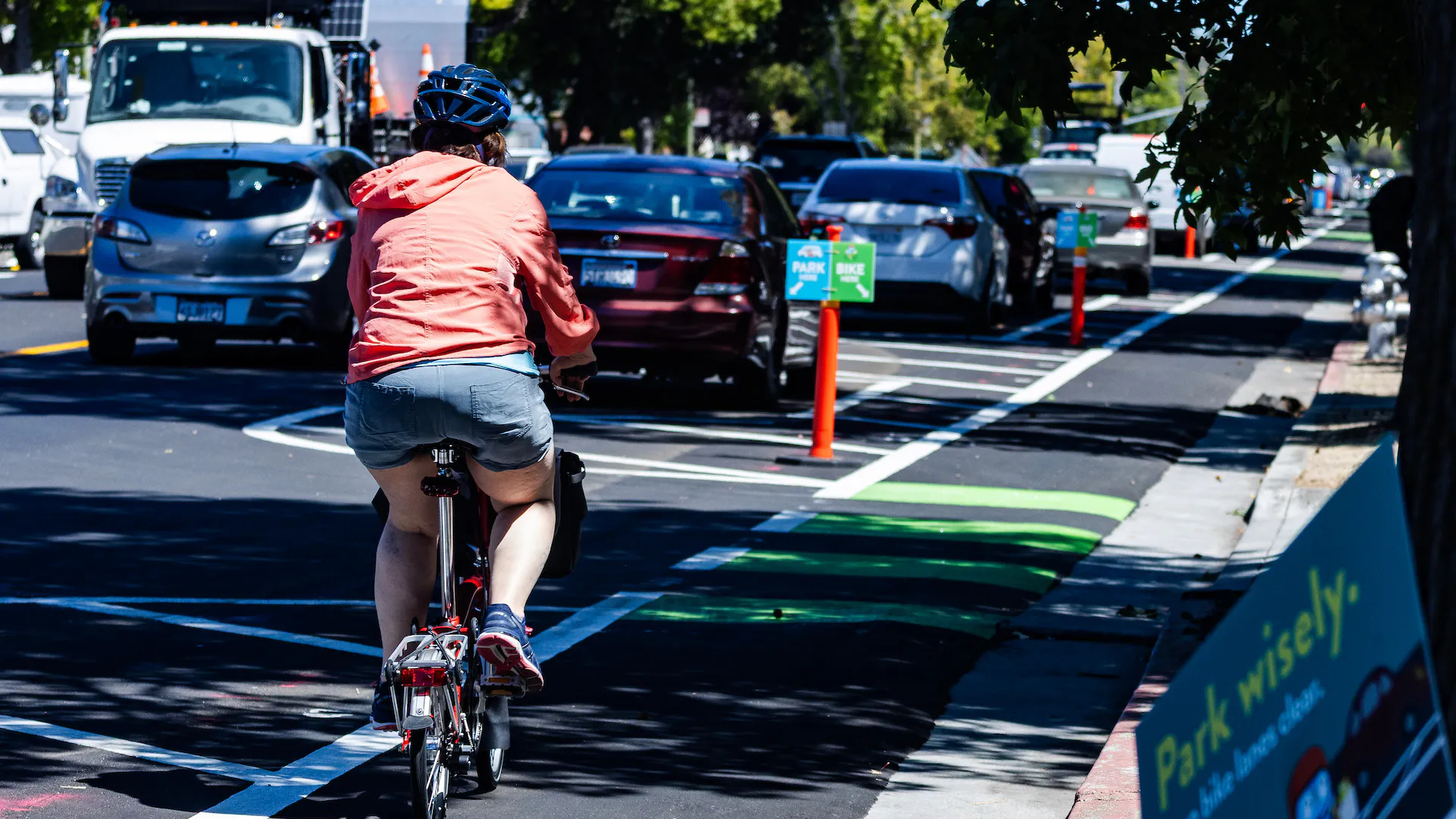
I am writing to express my strong support for the City’s Active Transportation Plan (ATP) and to offer specific recommendations that I believe will meaningfully improve safety and accessibility for pedestrians and cyclists throughout our community. I am encouraged by the recent bicycle and pedestrian improvements on California Street and urge the City to continue and expand this important work.
1. Proactive Enforcement of Bike Lane Parking Restrictions
Illegal parking in bike lanes and in white-striped buffer areas remains a serious and ongoing hazard on California Street. I urge the City to take a proactive rather than reactive approach to safety enforcement:
Implement proactive police monitoring and ticketing of vehicles parked illegally in bike lanes or in white-striped buffer areas that block sightlines. We should not wait for a serious accident or fatality before taking action—enforcement must be a preventive measure.
Install planters or plant trees in all white-striped buffer zones to physically prevent vehicles from parking there. Physical infrastructure is the most reliable long-term solution to deter illegal parking and protect cyclists, but the plastic bollards are already getting worn down and damaged, or in some cases have been destroyed by cars completely. Metal planters or trees will provide the safest long-term solution, and won’t require constant maintenance/replacement like the plastic bollards.
Strictly enforce parking restrictions on all protected bike lanes to ensure these facilities function as intended.
2. Enhanced Pedestrian Safety at Intersections
I strongly support the adoption and expansion of Leading Pedestrian Intervals (LPIs) at intersections across Mountain View. Giving pedestrians a head start before vehicles receive a green signal reduces conflicts and reinforces that pedestrians have priority at crosswalks. I recommend that:
The City evaluate and implement Leading Pedestrian Intervals at intersections identified as priorities by staff, in order to improve safety and signal that pedestrians come first.
The ATP update the “Leading Pedestrian and Bicycle Interval Policy” to explicitly clarify, through clear signage and signal design, that cyclists are legally permitted to proceed when pedestrian signals begin. New signal installations should make this unambiguous to both cyclists and drivers, like Palo Alto does.
3. Adopt NACTO Design Standards
I urge Mountain View to formally adopt the National Association of City Transportation Officials (NACTO) Urban Street Design Guide as the standard for street design in the ATP. Specifically:
Require narrower travel lane widths—such as NACTO’s recommended 10-foot lane standard—which reduce vehicle speeds, improve safety for all road users, and free up space for protected bike lanes and wider sidewalks.
4. Accessible Infrastructure: Flush Curb Cuts
Current curb cuts with up to 2-inch lips create dangerous tripping hazards for pedestrians and present significant barriers for wheelchair users, cyclists, and those with mobility devices. The ATP should adopt a clear standard requiring all curb cuts to be fully flush with the street surface. This is a basic accessibility and safety requirement that should not be treated as optional. It’s very easy to crash a road bike with thin tires hitting those curb cuts at an angle.
5. Planning for Rideshare and Delivery Loading Zones
Rideshare and delivery vehicles stopping in bike lanes and travel lanes are an increasingly common and dangerous problem. I encourage the ATP to develop a proactive plan for designated loading zones for rideshare and delivery vehicles as part of all new development projects. Addressing this now—before the problem becomes entrenched—will prevent future conflicts between vehicles, cyclists, and pedestrians.
Thank you for your dedication to improving active transportation in Mountain View. I am proud to live on a street that has already seen meaningful improvements, and I am hopeful that the ATP will build on that progress citywide. I respectfully ask that ATPAC and City staff consider these recommendations as you finalize the plan. Overall, I’m very happy with the improvements to bike and pedestrian safety in California, and I hope they stay! Thank you for all your hard work making Mountain View safer.
I want to echo Eugene65’s comments about the importance of building a connected low-stress bike network. The ATP should treat low-stress connectivity as a core measure of whether the bike network is actually usable, not just whether a bike lane or route technically exists.
Mountain View has some bike lanes, trails, and neighborhood routes, but we haven’t built enough low-stress facilities yet, and definitely not enough to create a connected low-stress network that gets people where they need to go for everyday trips. A few isolated bikeways aren’t enough if people still have to deal with stressful gaps, uncomfortable intersections, fast traffic, or disconnected routes.
That’s likely one reason we aren’t seeing a bigger jump in the number of people biking. It’s not necessarily because people don’t want to bike. Many people are interested, but they don’t feel safe because the risks are very real. Most people are risk-averse and fall into the “interested but concerned” category: they may be open to biking, but they need facilities that feel safe, comfortable, connected, and predictable.
On busier or faster streets, that often means real physical protection, not just paint or plastic flex posts that function more like “vertical paint.” Flex posts may help visually mark space, but they don’t provide meaningful protection from a distracted driver on their phone, especially on streets where cars are moving fast enough to seriously injure or kill someone.
I’ll add this from personal experience too: I used to be much more in the aggressive/confident rider bucket, but even as someone who loves riding a bike, I now find myself leaning more toward the “interested but concerned” group. I don’t want to get injured or killed, and I’ve had friends who’ve been hit. At some point, it’s just not worth it. It becomes a question of calculated risk.
That’s also why speed matters so much. The difference between 20 mph, 25 mph, and 30 mph may not sound huge when you’re driving, but it makes a big difference when a person walking or biking is hit. A crash at 30 mph is far more likely to kill or seriously injure someone than a crash at 20 mph. So when we talk about low-stress bikeways, we also need to talk about vehicle speeds, not just bike lane striping.
The ATP should clearly distinguish between bike infrastructure that exists on a map and a bike network that actually feels low-stress and usable. A bike lane may technically exist, but if it disappears at intersections, requires people to merge with fast traffic, lacks meaningful protection on higher-speed roads, or doesn’t connect to everyday destinations, it isn’t meaningfully available to many residents.
The final ATP should include stronger policies and metrics for building a connected low-stress network, closing high-stress gaps, improving intersections, lowering vehicle speeds where needed, and making sure bike routes connect people to daily destinations like jobs, grocery stores, parks, transit, schools, medical appointments, libraries, and community services.
Safe Routes to School is important, but it isn’t a substitute for a citywide low-stress network. Many residents aren’t traveling to school. They’re commuting to work, shopping, taking transit, visiting parks, running errands, carrying groceries, traveling with children, or making other everyday trips. The ATP should evaluate whether the network works for those trips too.
Davis is a useful example for Mountain View to study because it shows what a more connected, everyday, low-stress bike network can look like when biking is treated as practical transportation, not just recreation or school access.
Useful references:
* Mineta Transportation Institute, Low-Stress Bicycling and Network Connectivity: https://transweb.sjsu.edu/research/Low-Stress-Bicycling-and-Network-Connectivity
* Four types of cyclists: https://jenniferdill.net/types-of-cyclists/
The ATP should include a dedicated equity section that carries forward the equity findings from the 2023 Existing Conditions and Needs Summary. The draft ATP references equity as a guiding principle and scoring factor, but it does not appear to include a standalone equity analysis or implementation framework.
The Existing Conditions report already identified important equity issues, including gaps affecting lower-income residents, zero-vehicle households, youth, seniors, people with disabilities, transit riders, and workers traveling to lower-wage commercial corridor jobs. Those findings should not be lost between the technical analysis and the final plan.
The final ATP should also include a clearer definition of All Ages and Abilities and identify the full range of users AAA facilities are intended to serve. AAA should not be treated as vague shorthand for “better bike facilities.” It should explicitly consider children, older adults, women, people with disabilities, people using bike share, low-income riders, people of color, new riders, and people carrying cargo or goods.
This is especially important because women are often underrepresented in bicycling and are sometimes used by transportation researchers as an indicator group for whether a bicycle network feels safe, connected, and practical for a broader range of everyday users. If a network only works for confident and aggressive adult riders, it isn't truly All Ages and Abilities.
The ATP should also strengthen its approach to equitable outreach. Outreach should not rely primarily on online comment forms, public meetings, or people who already follow City transportation projects closely. The final plan should describe how the City will reach residents who may be less likely to participate through standard channels, including renters, lower-income households, zero-vehicle households, seniors, youth, people with disabilities, non-English-speaking residents, shift workers, transit riders, and families with caregiving responsibilities. The City should also explore community-based outreach models, including examples such as CivicThread’s work in Sacramento and promotoras-style outreach models used in San Francisco and other cities.
The final ATP should make equity more actionable by clearly identifying how the City will prioritize projects that close sidewalk and All Ages and Abilities bicycle network gaps in lower-income and zero-vehicle household areas; improve first/last-mile access to high-ridership transit corridors such as El Camino Real; improve access to commercial corridors and lower-wage job areas, not only major employers; and address comfort factors such as shade, crossing spacing, sidewalk condition, and access for people using strollers, wheelchairs, and other mobility devices.
Equity should be more than a general value statement or scoring category. The final ATP should include specific equity priorities, implementation actions, and reporting measures so the City can track whether active transportation investments are improving access, safety, and comfort for the residents who face the greatest barriers today.
Useful references:
- CivicThread: https://civicthread.org/
- PODER promotoras outreach model: https://podersf.org/promotoras/
- NACTO All Ages and Abilities: https://nacto.org/wp-content/uploads/NACTO_Designing-for-All-Ages-Abilities.pdf
- Women as an indicator species in Scientific American: https://www.scientificamerican.com/article/getting-more-bicyclists-on-the-road
- Four types of cyclists: https://jenniferdill.net/types-of-cyclists/
If the City wants to be safe for pedestrians and cyclists, the cyclists must follow the rules, like stopping at stop signs; that includes both electric and "only signs." In twenty years, I have seen only one cyclist stop. P.S. The pedestrians have the right of way; cars should stop for them
Yesterday (May 14), trying to get onto California was impossible. That "impossible" is not excessive. The line in the left turn lane did not move. Not at all. One could not see the end of the line. If the City thinks road diets are a great solution, it is avoiding reality. The cars on the dieting streets get shoved down the throats of the streets which become miserable dead stops, immovable. Sacrificing one set of roads because someone thinks they are bigger streets and therefore those streets will just have to have more cars - it will not work. It also collects more pollution. lesliejf
I strongly support the direction of the Mountain View Active Transportation Plan, especially its emphasis on a connected, low-stress, All Ages and Abilities network. The plan correctly recognizes that Mountain View already has many active transportation assets, but that gaps, stressful crossings, and disconnected facilities prevent many residents from walking and biking for everyday trips.
I am also commenting as someone who has lived in Mountain View for 15 years. Over that time, I have been repeatedly struck by how much potential our city has to be a truly walkable and bikeable community — and also disappointed by the lack of urgency and execution in creating safe, connected ways for people to get around without a car. Mountain View is compact, flat, has good weather, strong transit connections, major employers, schools, parks, and a vibrant downtown. Yet for many everyday trips, driving still feels like the default because walking and biking often do not feel safe or convenient enough for ordinary residents, families, children, and older adults.
I encourage the City to strengthen the plan in three key ways:
1. Focus on completing a connected low-stress network.
The plan should prioritize network completion, not just individual corridor projects. The key question should be: can a child, older adult, parent, or less-confident rider make a complete low-stress trip from their neighborhood to schools, parks, transit, downtown, El Camino, and major employment areas?
2. Move faster on near-term safety improvements.
Mountain View should not wait for full street reconstruction to make meaningful progress. The City should use quick-build protected bikeways, safer crossings, daylighting, curb extensions, protected intersections, and pilot projects to improve safety now. We can't wait for more accidents before we improve conditions - we already have too many sad stories with us now.
3. Add measurable goals and accountability.
The plan should include clear implementation targets, such as a five-year priority All Ages and Abilities network, annual targets for protected bikeway miles and intersection improvements, a Level of Traffic Stress analysis, and metrics showing whether more residents can safely reach schools, parks, transit, downtown, and commercial areas without driving. Without targets, I worry another 15 years will pass without significant improvements in people using active transportation methods.
Mountain View has the size, climate, and destinations to become a truly bikeable and walkable city. This plan is a strong foundation, but it should be strengthened with clear timelines, measurable goals, and a commitment to completing a connected low-stress network that works for all ages and abilities. After 15 years of living here, I hope the City treats this not just as another planning document, but as a commitment to act with the urgency needed to make walking, biking, rolling, and taking transit safe and practical for many more people.
When a new crosswalk is added, please ensure there is a few weeks' worth of notice before the feature is turned on. E.g. clear markings by way of cones, illuminated portable signs warning of upcoming changes, letting a newly constructed physical infrastructure sit for a few weeks. This is important to avoid traffic accident when a new feature is turned off. I had the experience of being rear-ended at a newly installed crosswalk with new traffic light, where the Russian School of Math is located on El Camino. The person who rear-ended me (hard) even lived across the street, yet he wasn't aware of the new change. Luckily when he hit me, my car didn't move forward enough to hit the bikes that were cross at that new crosswalk!
I really applaud that the change at Sleeper to Cuesta is well signaled. The big portable sign board has been sitting there for >2 weeks prior to go-live date, and now that it is postponed a bit longer, a new date is given on that sign board. In addition, it is obvious now with the crosswalk having been completed, that change is coming soon. It gives drivers, bikers, walkers, time to process the upcoming change so that we can all safely navigate the new system.
When possible, during planning and construction phases for every project, attention should be placed on potential for adding porous surfaces, to help capture rainwater to recharge the underground aquifer. This aids climate resiliency, avoid water runoff (which also contributes to erosion and storm drain overload during extreme events, which are increasingly common). Vegetated swales are pretty uncommon around town, but they add beauty and a touch of nature for bikers and walkers. Some could be opportunistically included in paseos or neighborhood improvements where there is suitable slope. Demonstration projects with educational signs about the cross benefit to water management of ATP project can increase public understanding.
I"m happy to hear Mountain View has a comprehensive ATP. I wish there was more community outreach so citizens understand what the changes are, why Mt View is heading in this direction, and how it benefits us all in the long run. I think this would go a long way with buy in from the community and higher compliance (i.e-use of bike lanes, public transport, and walking).
I strongly support protected Bike lanes on Moffett Boulevard. Dozens of workers and students bike the route between the Mountain View Caltrain station and Moffett Field every day. Every day there are cyclists out in the vehicular lanes with absolutely no protection between them and high-speed vehicular traffic, even when it is dark out. This is an actively unsafe condition, and the city should move on it quickly!
We should also be willing to work with Caltrans to put a two-way bike lane/mixed-used track on the north side of the Moffett/101 overpass. This would make it possible to ride to Moffett Field without vehicular conflicts. and also close a sidewalk gap, since the current on sidewalk is also on the south side where the vehicular on/off ramps are. We should also ensure adequate and safe crossing of Central expressway at Moffett, with proper protection and comfort for all ages and abilities.
I would like to uplift comments by SPvarsitypark, Mary 98, AprilWebster , and Cliff ( I don't remember Cliff's full user name and don't dare change pages as all typing will be lost.) Progress should be reported out yearly to council and BPAC. We need to be completing projects and moving forward each delay costs us our tax dollars. Not only do we have a higher cost in dollars, but a higher cost in lives as we speed toward building housing we need to be moving projects more quickly too and looking at Quick Builds. Integrating the Green Complete Streets and the Biodiversity and Urban Forestry Plan and other standards like NACTO and Caltrans DIB-94 could help us get the designs done in an efficient manner with the guidance that the public has already provided. I was surprised that we aren't completing the streets like Middlefield and that it is only a section- as another user said on a different page Crittenden children should be able to bike safely to school not unprotected next to speeding cars. Protected bike lanes, with trees providing shade and protection are two of the ways to help us residents feel safe enough to bike. We should also be able to bike safely to Palo Alto and neighboring cities as another commenter noted. Half of our kids go to Los Altos High and there is no safe way to bike there- Rengstoff has disappearing bike lanes, no safe crossing of El Camino and often no bike lanes due to large parked trucks or construction signs without taking into consideration the timing or safety of kids going to school, they are forced into rush hour traffic. Thank you so much for working on these plans and taking public input- I greatly appreciate your efforts to make Mountain View a safer, more livable city for all!
My first comment is that the way we were allowed to comment on previous public comments was far superior to this. First, the thumbs up or elevating comments was really beneficial- here there is no easy way to agree with comments. Second, previously we could reply as well which meant we could agree with parts of a comment even if we didn't agree on all points and it was beneficial to be able to expand on points too, thus the collaboration. Third, as I look at the comments to see what I agree with or want to expand upon the comment box loses all text that has been written when I look at other comments on the next page. I hope these improvements for public comments will be implemented in all Collaborate Mountain View comment forums in the future- let's be sure it's easy for residents to collaborate.
We should set a standard for traffic circles to follow proper round-a-bout rules. All traffic should slow to yield to traffic in the circle. Currently, the 2 way stop at each of these intersections results in the drivers that know the area going very fast without looking for pedestrians if they take the route without the stop sign. We have many of these around the city and should have standards that align with international driving expectations as we have a very diverse city.
It would be helpful if the plan could specify how police can help active transportation by enforcing laws.
1) warning or ticketing vehicles that park in bike lanes
2) warning or ticketing vehicles that have tinted windshields and front side windows. As a pedestrian and bicyclist it is important to make eye contact before crossing in front of a car, and the tint makes it impossible
3) Deterring bike theft. For years there has been an "individual" who uses angle grinders to cut through locks on the MVHS and LAHS campuses. As far as I know, that individual has never been apprehended. I know of at least one student who stopped biking after his bike was stolen, and we've had to replace a stolen bike and a year later there was another attempted theft (the lock was cut through but the thief seems to have fled before taking the replacement bike). These frequent thefts occur on evenings and weekends on high school campuses, when some students have club activities and need to be able to use their bikes. It would be nice if decreasing bike theft were a priority for the police.
I strongly support the comments of April Webster and Cliff3769.
There should be a policy set in the ATP to upgrade Standard Details to meet NACTO or similar standards. Without Vision-Zero-friendly standards in place, every project is in danger of using old approaches that do not meet the Vision Zero goals that Mountain View has adopted. Projects that don't incorporate Vision-Zero-friendly standards from the start add to the project cost and timeline*, and/or run the risk of allowing non-Vision Zero-friendly infrastructure to be installed, resulting in missed opportunities with which the public will need to live for the next few decades. *They add to project cost, timeline, and re-work for Staff if/when it's decided that it's necessary to re-design the infrastructure to be Vision-Zero-friendly.
Mountain View aspires to adding 11,000+ housing units, equating to likely over 22,000+ residents within the current 8-year ABAG cycle. In addition, much of Palo Alto's and Los Altos' high-density housing is being built very near our city borders. There is not enough space in MV to add roadways for an over 25% increase in our population, unless more people begin using Active Transportation (AT). They will only do that if Active Transportation is safe and attractive.
Regarding the proposed changes to Sylvan Ave., The suggested plans of removal of parking on Sylvan especially the first couple blocks from El Camino is not needed and should not be done. There are Apartments on one side of the street and Duplexes on the other side of the street which need street parking for the residents of these multi use residences and for delivery vehicles.
Sylvan Ave. already is nicely laid out with parking on both sides and bike lanes on both sides up and down the street.
A main concern is cars turning onto Sylvan from El Camino to get to the 237 onramp at the end of the street. They do not want to take the 85 exit from El Camino onto the 237 onramp. They speed down Sylvan like it was a highway with no regard to the large neighborhood full of neighbors trying to cross Sylvan or cars in the neighborhood trying to turn left or right onto Sylvan.
What is needed is upgrading the painted lines for the lanes, bike lanes and crosswalks and include the speed limit of 25 miles per hour also painted on the street to show everyone the layout and speed limit.
The new speed limit signs going from El Camino towards Moorpark need to be better placed as they seem to be hidden behind tree limbs which make them hard to see and even if the branch is removed, it will grow back and then who will monitor to make sure signs are visible. The signs need to be moved for better visual and not remove the trees.
There needs to be the flashing lights added at the crosswalk at Sylvan/Sullivan as there are many walkers with kids and dogs crossing there and cars just seem to speed by not yielding to the walkers. The flashing lights will help alert the drivers.
There needs to be a crosswalk at Sylvan/Rainbow added. We need to make it safe for all our neighbors to walk across Sylvan.
Thank you for making Sylvan Avenue 25 miles per hour. It was pointed out to me that the Apple and Google maps and maybe other driving apps are not reflecting the change from 30 mph to 25 mph.
We need more road diets, quieter streets, and more trees in the streets (in the middle and on the shoulders)!
Road diets work; they make our streets safer and greener.
My wife and I have lived at 1690 California Street since 2009. As long-term residents (and my wife, a MV public school alumna), it's important for all of you reading this to know that while there's been some opposition to the California Street "road diet," many of us in the neighborhood truly value the changes.
The street is significantly quieter, cars are driving more slowly, and the reduction in "car craziness" makes it much safer to back into our driveways. That said, based on frequent conversations with our neighbors, we believe the California Street Road Diet has been a success, and that two small tweaks would turn this project from a "good" change into a "perfect" one:
• Upgrade the Aesthetics: The blue planters feel temporary and "silly" to many. We would love to see them replaced with permanent, in-ground planters and trees, similar to the beautiful stretch of California Street closer to Castro. Landscaping should be the priority on residential streets like ours please, and used whenever possible, instead of plastic separators like those on El Camino.
• Fine-tune the parking: Restoring street parking in the current hash-mark areas (where small cars can safely fit) would resolve the biggest frustration we hear from neighbors.
We also want to highlight the positive feedback we hear from less vocal residents:
• Families—including neighbors from bike-friendly cultures like Denmark—love the new cargo-bike-friendly lanes.
• The overall environment feels safer and more community-oriented.
We simply ask that everyone please consider these points as we plan the future of Mountain View’s streets.
Best regards,
Brian Cargille
Please update Figure 19 on page 38. Transit routes can't be differentiated from the existing sidewalks, trails, and paseos because they're both blue.
I am a 30-year resident of the Sylvan Park Neighborhood. For the first 15 of those years I commuted to work by auto every day. Now, I drive most days to maintain my family's basic needs and lifestyle, and I bicycle several times a week for exercise in my neighborhood and beyond. I expect that I am a typical middle-class resident of the City (if older than most). While the production of the ATP is praiseworthy, the implementation and improvements recommendations are, in my view, significantly flawed to the extent that they do not take into account the current and future needs of the vast majority of residents: the motorists. No amount of analysis or wishful thinking will convert our suburban city of 75,000, with no central core, into a walkers' and cyclists' paradise or induce people to use their autos less. People have to work, to shop, to convey children to activities, to visit or care for friends and relatives, to attend meetings and performances. This is obvious. Consequently, the City should not consider projects that would involve removing existing vehicle lanes or parking spaces where they now exist. Such draconian changes are likely to increase the stresses of our daily lives and foster resentment among, not only the City's constituents, but the thousands of road users who pass through the City every day. Mountain View is not an island. It is currently a thoroughly livable place (see, e.g., the charts on page 29) that would not benefit from radical change. Certainly, the City should encourage its citizens to drive less and to carpool, should resurface roads where needed (Miramonte, please!), and should upgrade bike lanes and crosswalk markings wherever they can be done without removing vehicle lanes or parking spaces.
It is extremely important to have protected bike lanes on Middlefield Avenue from Ferguson all the way to Crittendon Middle School. Many kids that attend Crittendon middle school have no easy way to access the school from the populated Whisman Station area. I hope the city prioritizes placing protected bike lanes and curbs that prevent cars from turning right into bikers. This should be one of the first projects done. We have already seen a child killed on a bike because a truck did not see him. Providing this protected bike lane is pivotal.
I agree with April Webster's feedback that more clarity on design standards would be good (so we know the city plans to use the most up-to-date standards), and also that it would be helpful (in terms of having a permanent record that is easily accessed) to have as much of the material that went into the plan (e.g. existing conditions reports, and even community input), as appendices to the ATP.
It is also really important to list projects that have not yet been completed, but already exist as projects, so that the plan is a complete plan. For example, for Rengstorff, it is not clear whether some sections were not included in the plan because there are already existing projects (but those are not specified in the plan), or if those sections don't have planned upgrades.